The Case for Defense that Europe’s Industry Hasn’t Made
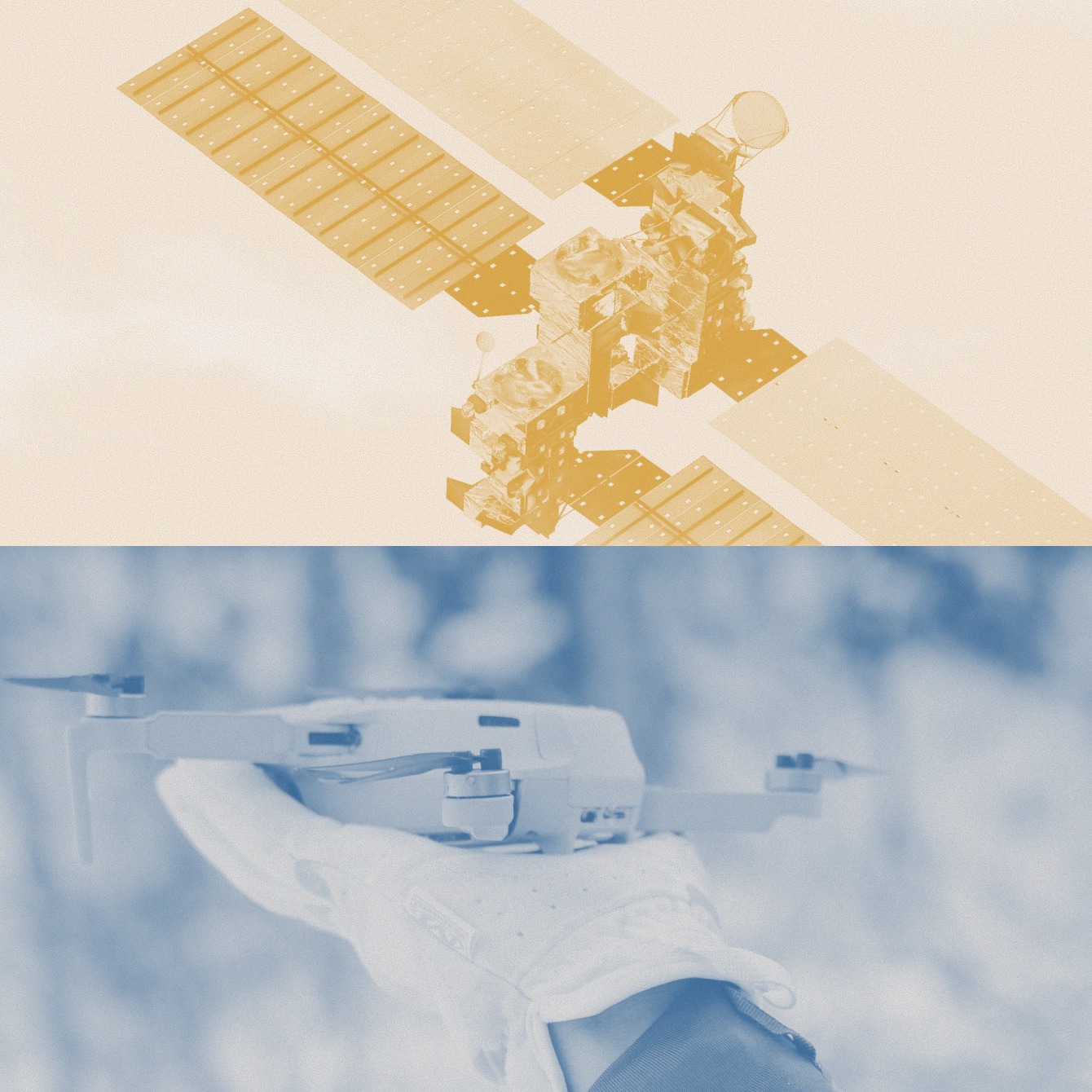
European defense is booming. Traditional industrial conglomerates are repositioning themselves as dual-use firms. A new breed of startups - drone makers, autonomy companies, AI systems, software-first defense ventures - is raising capital at speeds the sector has not seen in a generation. Ukraine has become, in the industry lingo, a laboratory: a place where new technologies are tested, iterated and validated under conditions no peacetime procurement cycle could simulate. The vocabulary of the moment is speed, iteration and experimentation.
A Europe that had been under-building its defense industrial base for decades is now running ahead. A generation of technologists who would have stayed inside civilian tech, is now considering European defense ventures seriously for the first time. Capital is accessible and the political window is open. This is the most consequential moment of the European defense sector since the end of the Cold War.
A transformational moment for European defense does not arrive only through technology and finance. To sustain the political and public support this reawakening requires, the actors in the emerging defense and technology ecosystem must do something harder: earn a genuine societal license to operate in a demilitarized culture. That means developing a philosophy and a corresponding narrative rooted in the sector’s value to European civic life and future competitiveness. The firms that understand this earliest will find it a competitive advantage. Those that don’t will find it a liability.
The demilitarized majority
Much of continental Europe, and especially Germany after 1945, rebuilt civic identity on the active renunciation of force. Nie wieder Krieg is not just a slogan one sees in a demonstration in Berlin, but a structural postwar feature of Federal Republic that sought to be trusted by its neighbors again through proactive demilitarization.
As a result, the military and its industrial infrastructure occupy a charged position in European culture. In American civic life the military can appear at a pre-game ceremony without the moment being treated as a political event. In Germany, Austria and much of the Nordic region, no defense announcement lands as mere policy. Each is received as a signal, scrutinized for intent, weighed against history and often met with unease.
There is also a second structural difference that the defense industry often glosses over. Much of Europe does not have a professional volunteer military at all. Finland, Sweden, Norway, Denmark, Austria, Greece, Estonia, Lithuania, Switzerland all run on conscription, and I suspect this model will continue to grow. A conscript system makes defense a passage through which much of the citizenry moves, not an institution civilians relate to from the outside. The armed forces are, in a literal sense, a civic institution staffed by the society, embedded in the society, and subject to its norms.
The Zeitenwende is a window that can close
It is tempting to read the positive polling on European defense spending since 2022 as a long-term societal mandate for the industry. It is not. Scholz’s Zeitenwende speech opened a legitimacy window, but it did not rebuild the sociological architecture beneath it. Public support remains conditional on the continued visibility of military threat from Russia. If conditions soften, the reflexive discomfort may well reassert itself. This matters for an industry operating on ten- and twenty-year horizons. Decisions being made in 2026 about capacity, workforce and public presence will land in a legitimacy environment that looks different from today's. Building the civic relationship only for the current cycle would be an error. Building it for the architecture beneath the cycle is the durable strategy.
The usual narrative traps
The existing defense communications playbooks fail to create the kind of long-term momentum the industry and continent need. Worse, several of their defining habits actively work against it.
Hardware fetishism only speaks to immediate buyers. This is the trade-show language of capability, the reverence for the object. It is built for procurement audiences including ministries, generals, technical buyers, and it serves them well. It does not reach the minister’s chief of staff, the institutional investor or the engineering graduate deciding where to spend the next decade. Most defense companies have no promise that extends beyond the immediate crisis.
Euphemisms sound insincere. “Security solutions.” “Defense technologies.” “Protection.” There was a time when this language smoothed the edges of a difficult conversation. Sophisticated readers now register it as euphemism, and euphemism detected erodes trust faster than plain speech would have. The sector has talked itself into a register that signals what it was designed to hide.
The American playbook works in America. The vocabulary of American defense communications - freedom, warrior, service, the flag-draped institutional pride - is culturally unavailable in Europe. Much of Europe runs on conscription; what the American model calls “the troops” is, in Helsinki or Stockholm, simply citizens, serving.
Opacity fails to contribute to the European project. Defense secrecy is of course to some extent a structural necessity, but it is also a habit that carries a real legitimacy cost and forfeits the opportunity to help build the European defense-technological ecosystem that the continent needs.
The untapped opportunity
The industry's current public case for itself is overwhelmingly threat-based. Look at Russia. Look at the world. Threat mobilizes the audience already disposed toward the sector. It cannot move the demilitarized European majority and will read as self-serving if the geopolitical climate cools.
The real alternative is to anchor the defense industry’s philosophy and narrative in civic purpose. Not in what defense protects against, but in what it helps preserve and build. Europe has spent eighty years building a civilization whose default setting is not to reach for force. That achievement requires, among many other things, a defense capacity the Europeans can in good conscience, accept.
The vocabulary this argument calls for already exists. It is the language of national resilience and total defense - a concept well-developed in Finland, spreading across the Nordics and Baltics, and increasingly relevant to the rest of the continent. Total defense understands defense not as what the armed forces do, but as what a society is collectively prepared to sustain: its critical infrastructure, its energy and food systems, its information integrity, technological sovereignty, economic competitiveness and the psychological preparedness of its citizens. Defense, on this view, is continuous with civic life, not a specialist activity performed at its edge. It is the frame a demilitarized culture can recognize as its own, because it describes defense in terms the culture already uses about itself. The European defense industry has, so far, almost entirely failed to speak this language, even though this is precisely the culturally accepted language in the continent.
As more European industrial firms and startups move into the defense space, there needs to be a serious rapprochement between defense and civil society. The civilian side has more to gain from it than is commonly understood. European civic tech, open-source infrastructure and research universities are adjacent ecosystems with deep technical overlap with the defense sector. The autonomous systems work happening in defense startups draws directly on civilian AI research. Dual-use sensor platforms being developed for military applications are simultaneously advancing capabilities in satellite imagery, logistics and climate monitoring. Cybersecurity tools built to military-grade standards are migrating into critical national infrastructure, financial systems and hospitals.
A generation of engineers, researchers and founders is deciding, right now, whether to build their careers at European or American defense firms, or to avoid the sector entirely. The European case must provide something unique to attract the best people: the chance to work on something that is constitutively European and that is integrated with a civic culture the best technologists want to live inside. Working on national resilience is a qualitatively different proposition from working on defense in the inherited American sense, and European firms have barely begun to realize how much that distinction is worth to them in the competition for people.
What this means for the defense sector?
Trust in demilitarized societies is not given - it is demonstrated. The European defense industry will earn it when it behaves, recruits, invests, speaks and declines in ways that show it has genuinely understood the cultural verdict and built itself around it. The current momentum is not a substitute for this work. It is the opening that makes it possible. Europe's capacity to defend the liberal order it spent eighty years building depends on an industry that a largely demilitarized public can accept - and that the continent's best people want to build. Earning both is the work. It can be done, and it must begin now, while the window is open.