From Birkins to Bulldozers: The Age of Secondhand Everything
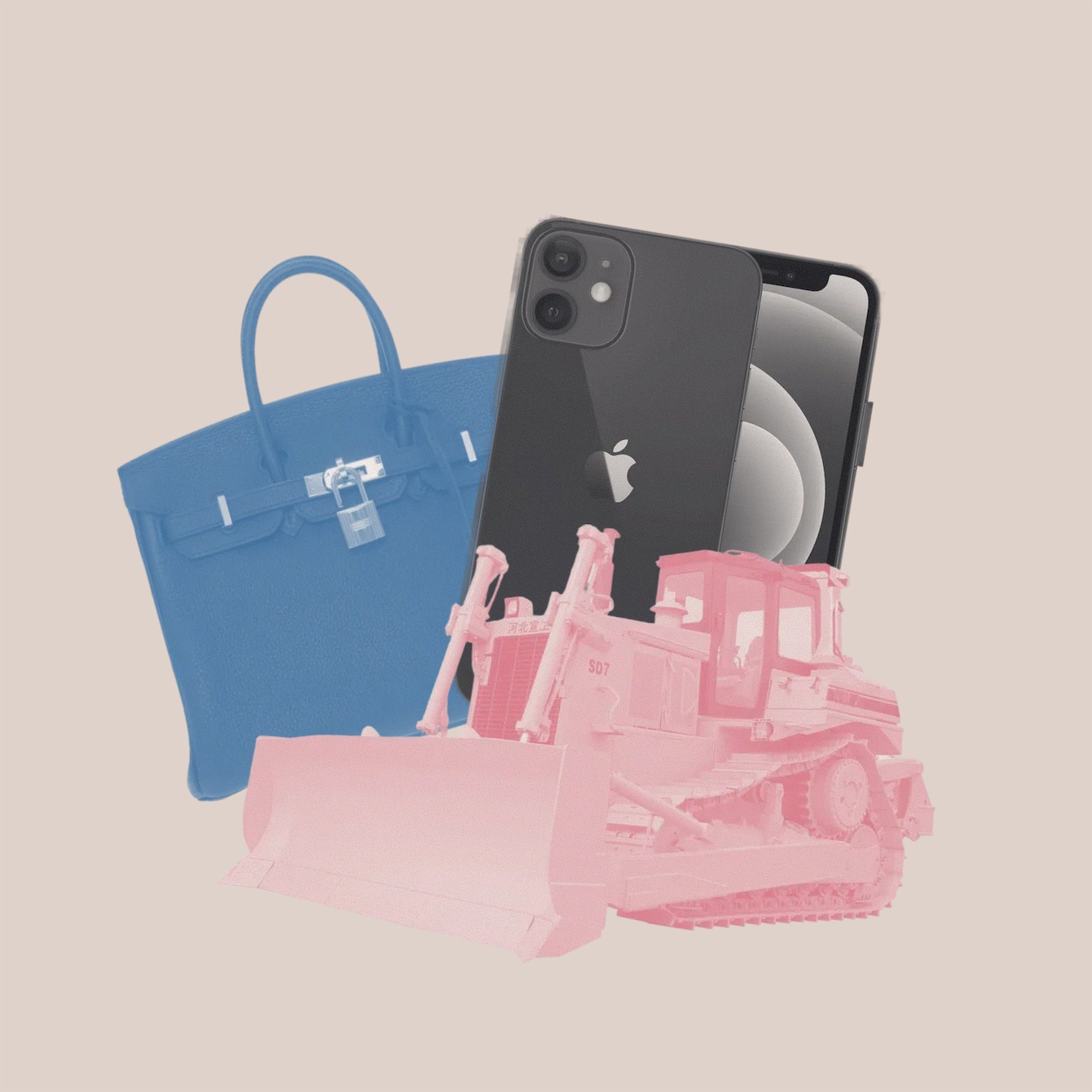
Though “secondary” or resale markets may have first made headlines in the aftermath of 2008 thanks to their niche popularity with thrifty millennials, they’re not playing second fiddle to the primary market anymore. Over the next decade, the secondhand market is expected to grow into a $1 trillion global industry. This time, it’s not just grandma’s old furs driving the market, but cars, handbags, heavy construction equipment, electronics, and everything in between. In fact, growth in the secondary markets is, in many cases, expected to outpace growth in the unused market (as is the case for smartphones, exotic cars, and luxury goods).
It’s a shift worth taking seriously— regardless of the industry you’re in—since it signals broader transformation in consumer sentiment. After all, the recent push towards secondary markets are the product of increased skepticism around company-driven innovation and new technologies that enable trust in historically low-trust environments. Staying competitive in this new paradigm will require brands to think about everything from their portfolio innovation strategies to the services and offerings they can provide beyond the product itself.
The Beginning Of The Modern Secondary Market
To understand where we are, it helps to get a sense of how we got here. You probably know some version of the story: in the wake of the 2008 financial crisis, a millennial-driven culture of DIY thriftiness emerged. People flocked to secondhand stores and vintage shops to simulate the kind of upward mobility they’d just been closed off from. What began with economic precarity soon became its own aesthetic (who doesn’t remember Macklemore’s 2012 “Thrift Shop”). Around this time, the secondary market also started to move online in earnest. Depop and the RealReal were founded in 2011, shortly followed by marketplaces for furniture like AptDeco (2014) and vehicles like Carvana (2012). These digital infrastructures let people participate in the secondary market regardless of their physical location (and though these digital marketplaces might have first gained prominence in the US, they anticipated similar offerings emerging in Europe and Asia).
Then, COVID hit. On the demand side, economic uncertainty— combined with more time spent online (where the digital infrastructure built out in the 2010s was patiently waiting)—contributed to a huge boom in sales. Meanwhile, decluttering and changing lifestyles during this period contributed to more supply as supply chain bottlenecks in the primary market further fueled the shift to secondary. We saw this, for example, in the automotive industry, where the shrinking supply of new cars was met with an increased demand for used cars, as well as in heavy machinery for construction, where extensions in original equipment lead times made it more profitable to buy used assets that could be immediately deployed.
Evolving Consumer Attitudes & Trust
These days, new conditions have emerged to shape consumer sentiment and drive people to the secondary market. Two major factors are worth touching on here. First, there’s growing distrust in the primary market. Consumers are becoming increasingly skeptical that companies are truly innovating with new products— rather than simply offering incremental improvements, or even offering products that are simply worse (a sentiment captured in videos like Vox’s aptly titled “Why everything you buy is worse now,” which has garnered 4.7M views). The ethos of categorical innovation, of moving fast and breaking things, seems like a vestige of the past. There’s a reason why Macquarie Dictionary’s 2024 word of the year was “enshittification.” Not only is this attitude changing consumer behavior, it’s also driving regulatory change as laws have been introduced to empower the secondhand market. Though the idea of “right-to-repair” may be decades old, state governments have been passing laws in recent years that codify the idea, driven in no small part by changing popular sentiment.
The second key factor is growing trust enabled by technology. While the trope of the used car salesman may have once accurately described the trustless nature of the secondary environment, new technologies are equipping consumers with the information and third-party validation they need to successfully navigate these markets. Companies are, for instance, integrating AI-powered processes to verify the provenance of their products (take for example, enterprise solutions like the LVMH-backed Entrupy) while everyday consumers are using AI to give themselves the know-how they need to feel confident in making a decision. And while technologies like blockchain haven’t quite become mainstream, brands have continued to experiment with its potential.
Looking Forward
It’s clear that the secondary market isn’t going anywhere. In responding to the forces driving this shift, brands will need to change how they frame and pursue innovation in their portfolios— showing consumers that their new products aren’t just more of the same. “Features-led” innovation, in which improvements are framed incrementally and limited to one-off capabilities, is no longer cutting it. What people want instead are categorically new ways of engaging with and thinking about a product. We see this, for example, with products like Rivian's Camp Kitchen, which reframes EVs as not just a transport vehicle, but a modular outdoor platform. Moreover, they’ll need to think about everything the consumer can’t get on the secondary market: a premium experience, continual servicing, in-house expertise. This is the logic driving brands like Bang & Olufsen to offer exclusive services— ranging from installation to 24/7 customer support—to consumers who buy directly with the brand. Ultimately, the rise of the secondary market represents a fundamental recalibration of consumer expectations that requires brands prove their worth through both categorical innovation and ongoing relationships that extend far beyond the point of sale.